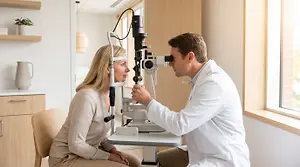
A general eye exam does more than determine whether you need a new glasses prescription. It provides an opportunity to evaluate how well you see, examine the health of your eyes, discuss symptoms, and identify changes that may need monitoring or treatment.
Even if your vision seems unchanged, some eye conditions may develop without noticeable early symptoms. Visiting an eye doctor in [tokens name='location'] for routine care can help you understand your current eye health and make informed decisions about your vision.
What Does a Comprehensive Eye Exam Include?
The exact tests performed will depend on your age, symptoms, medical history, and risk factors. A comprehensive eye exam may include assessments of:
-
Vision at near and far distances
-
Your eyeglass or contact lens prescription
-
Eye movement, focusing, and coordination
-
Peripheral vision and pupil responses
-
Pressure inside the eyes
-
The cornea, lens, retina, and other eye structures
-
Changes associated with eye disease or general health conditions
[tokens name='practice'] also uses digital retinal imaging and optical coherence tomography, commonly called OCT, to examine and monitor structures inside the eye when appropriate. Your optometrist will explain which tests are recommended and what the findings mean for you.
Why Schedule an Exam If Your Vision Seems Fine?
A routine eye check up establishes a record that allows your optometrist to compare findings over time. This may be especially useful because glaucoma, diabetic retinopathy, and age-related macular degeneration can produce few noticeable symptoms during their earlier stages.
The National Eye Institute explains that a dilated examination can help detect eye disease before it causes vision loss. How frequently you need dilation or other testing depends on your individual risk factors, so your eye doctor can recommend an appropriate schedule.
Routine care can also reveal small prescription changes that contribute to eyestrain, headaches, or difficulty driving at night, even when you have not noticed obvious blur.
Should You Mention Dry or Uncomfortable Eyes?
Yes. Burning, grittiness, watering, fluctuating vision, and contact lens discomfort may be signs of dry eye, although other conditions can cause similar symptoms. Sharing when the discomfort occurs and what seems to trigger it can help guide the examination.
If dry eye is identified, [tokens name='practice'] offers personalized dry eye treatment that may include home care, prescription drops, punctal plugs, or in-office therapies such as LipiFlow, depending on the cause and severity of the condition.
Can an Eye Exam Detect More Than a Prescription Change?
An exam can identify findings that warrant observation, additional testing, or eye disease management. [tokens name='practice'] provides ongoing care for conditions including glaucoma, macular degeneration, and diabetic retinopathy, using retinal imaging and other technology to monitor changes.
If care from another healthcare provider is required, your optometrist can discuss the next step and coordinate an appropriate referral. Sudden vision loss, new flashes and floaters, severe eye pain, or an eye injury should be assessed promptly rather than saved for a routine appointment.
What If You Need New Prescription Eyeglasses?
If your prescription has changed, the next step is choosing lenses and frames suited to your vision, appearance, and daily activities. Someone who spends hours at a computer may have different needs than a frequent driver or a person who regularly moves between indoor and outdoor settings.
[tokens name='practice'] offers prescription eyeglasses and a curated selection of designer frames. The optical team can help you compare lens features, frame fit, and style after your examination.
How Should You Prepare for Your Appointment?
Bring your current glasses, contact lenses, medication list, and insurance information. Be ready to discuss any symptoms, family history of eye disease, previous eye procedures, and health conditions such as diabetes or high blood pressure.
If dilation may be part of your visit, consider bringing sunglasses because your eyes may temporarily become sensitive to light. Some people also prefer to arrange transportation, particularly if they are uncomfortable driving while their pupils remain dilated.
When Should You Book a General Eye Exam?
Exam frequency varies according to age, eye health, medical history, prescription, and risk factors. Rather than waiting for blurry vision, follow the schedule recommended by your optometrist and arrange an earlier visit when new symptoms appear.
Schedule a comprehensive eye exam with [tokens name='practice'] in [tokens name='location'] to check your vision, discuss concerns, and receive care tailored to your needs.