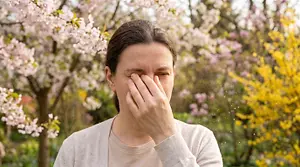
Hay fever is commonly associated with sneezing and nasal congestion, but it can also leave your eyes itchy, red, swollen, or watery. These symptoms may make reading, working, spending time outdoors, and wearing contact lenses uncomfortable.
Although mild symptoms often improve when pollen exposure decreases, ongoing or severe eye irritation deserves professional attention. An eye exam can help determine whether allergies, dry eye, infection, or another condition is responsible.
What Is Hay Fever?
Hay fever, also called allergic rhinitis, develops when the immune system reacts to airborne allergens. Despite its name, it is not caused by hay and does not produce a fever.
Tree, grass, and weed pollens are frequent seasonal triggers, while mold, dust mites, and pet dander can cause symptoms at other times of the year. Allergy symptoms from hay fever may include sneezing, congestion, a runny nose, an itchy throat, and eye irritation.
How Do Pollen Allergies Affect the Eyes?
When allergens reach the eye surface, the immune response can inflame the conjunctiva, the thin membrane covering the white of the eye and inner eyelids. Itching is one of the most recognizable signs of an eye allergy.
Other symptoms may include:
-
Redness in both eyes
-
Clear, watery discharge
-
Burning or stinging
-
Puffy eyelids
-
Sensitivity to contact lenses
-
Symptoms that worsen outdoors or during high-pollen periods
Avoid rubbing itchy eyes because friction can intensify irritation. A clean, cool compress may provide temporary comfort while you arrange appropriate care.
Can Hay Fever Cause Contact Lens Problems?
Yes. Allergens can collect on contact lenses, while an irritated eye surface may make lenses feel dry, gritty, or unstable. Hay fever contact lens problems can also include fluctuating vision, reduced wearing time, and discomfort that increases as the day continues.
Remove your contacts if they become uncomfortable and wear glasses until your eyes settle. Do not continue wearing a lens through pain or marked redness, and never use an eye drop with contacts unless its label or your eye doctor confirms that it is compatible.
An optometrist may recommend changes to your wearing schedule, cleaning routine, lens material, or replacement frequency. Daily disposable lenses may be useful for some allergy-prone wearers because a fresh pair is used each day, although suitability depends on the individual.
How Can Parents Recognize Pediatric Eye Allergies?
Pediatric eye allergies can resemble tiredness, dry eye, or infection. Children may rub their eyes frequently, blink excessively, complain of itching, or develop watery, swollen eyes after outdoor activities.
Encourage handwashing and discourage rubbing. Because children may have difficulty describing their symptoms, an examination can help distinguish allergies from infection or another source of irritation.
What May Help During Hay Fever Season?
Reducing contact with pollen may lessen symptoms. Practical steps include:
-
Check local pollen levels before extended outdoor activities.
-
Keep home and vehicle windows closed when counts are high.
-
Shower and change clothes after spending time outside.
-
Wear glasses or sunglasses outdoors to provide a physical barrier.
-
Use a cool compress over closed eyelids.
-
Ask your optometrist whether preservative-free artificial tears or allergy eye drops are appropriate.
Eye drops are not interchangeable, and products designed only to reduce redness may not address the underlying reaction. Prescription treatment may be considered after the cause and severity of symptoms have been evaluated.
When Should You See an Optometrist for Allergies?
Schedule an appointment when symptoms persist, interfere with contact lens wear, or return despite reasonable exposure-reduction measures. A routine eye exam is also an opportunity to discuss recurring seasonal discomfort, but new or active symptoms may warrant a separate problem-focused visit.
Seek prompt care for eye pain, significant light sensitivity, thick discharge, sudden vision changes, an injury, or severe symptoms affecting one eye. These findings are not typical of uncomplicated seasonal allergies.
Contact [tokens name='practice'] in [tokens name='location'] for an evaluation and personalized guidance for itchy, watery, or uncomfortable eyes.